
Clay County Arrest Records and Court Charges
Clay County arrest records can come from law enforcement and jail intake, while Clay County court charge records come from the court case. The arrest side may include the arresting agency, booking date, charge listed at booking, bond, jail hold, and current custody details. The court side begins when a complaint, citation, information, or indictment is filed and becomes part of the criminal court record held by the Clay County Circuit Court Clerk.
The difference matters. The Clay County Detention Center roster or jail phone can help confirm current custody. The court file can show whether charges were filed, amended, dismissed, reduced, transferred, or resolved. The full criminal court case, including pleas, motions, dispositions, and sentencing, belongs with Clay County criminal court records. The charge record is the accusation and status path between an arrest and the final outcome.
The WYMT report based on Clay County Sheriff's Office statements is a useful example of why arrest information and later court charges need separate verification.
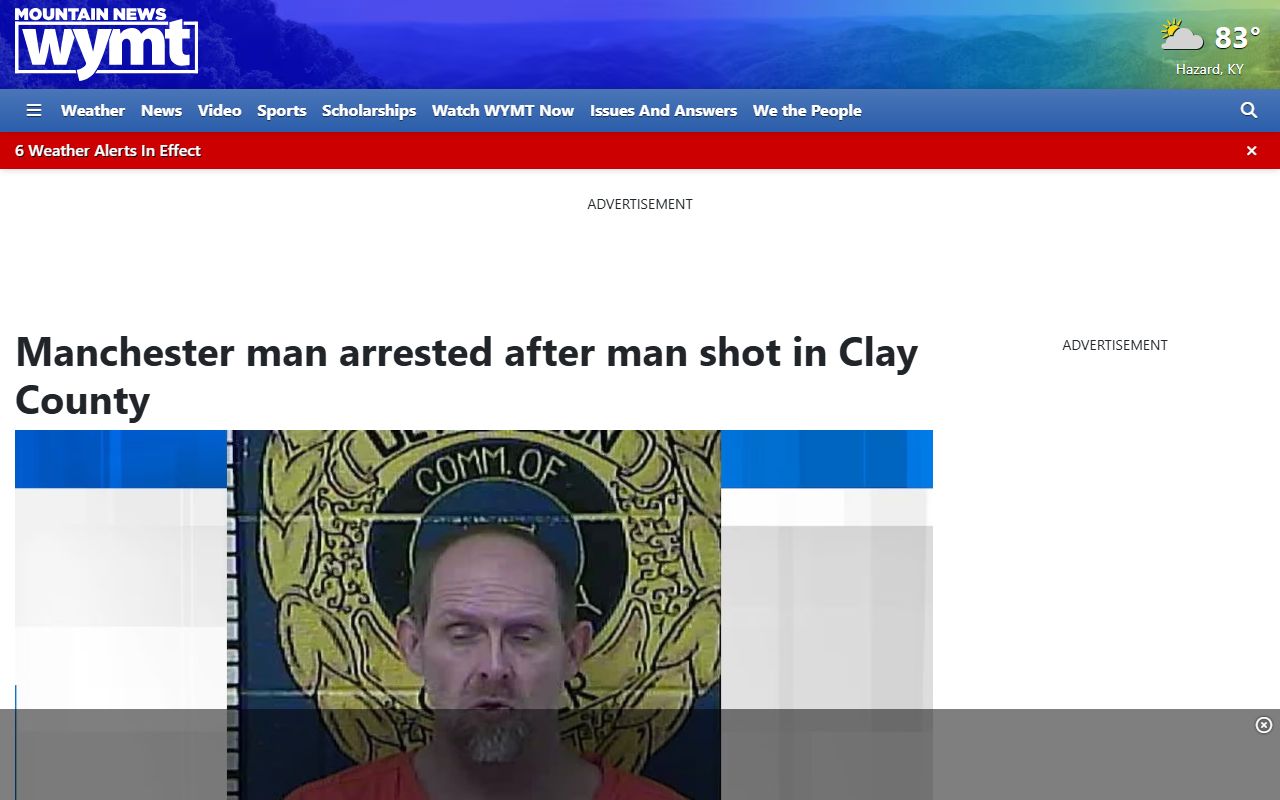
A news report may name alleged charges after an arrest, but the official charge status and outcome must be checked through court and clerk channels.
Search Clay County Arrest Records and Charges
There is no official Clay County active arrest-records portal in the research materials that replaces the court and jail channels. For custody and booking context, use the Clay County Detention Center and official JailTracker roster where available. For charges after arrest, search Kentucky eCourts, KCOJ docket tools, and KCOJ ePay when the case or citation is public and searchable. For copies and older files, contact the Clay County Circuit Court Clerk.
County offices serve different parts of the record. Sheriff Patrick Robinson's office is the law-enforcement contact path. Jailer Linda Smallwood's detention center is the jail custody path. County Attorney Joseph White's office handles misdemeanor, violation, juvenile, criminal complaint, and arrest-warrant request processes. The Commonwealth's Attorney handles felony prosecution in the 41st Judicial Circuit.
- Check current custody through the Clay County Detention Center or official jail roster if the question is whether someone is jailed.
- Search KCOJ eCourts or docket tools by defendant name, case number, citation number, court division, or date.
- Read each listed charge separately because one arrest can produce several counts with different status entries.
- Call the Circuit Court Clerk for certified charge records, older files, or records not shown online.
- Contact the prosecutor or defense counsel for case-strategy questions rather than relying only on a public summary.
Clay County Charges After Arrest
Formal charges after arrest are filed through charging documents. In Clay County misdemeanor and violation matters, the County Attorney is a key source because that office prosecutes those case types and provides the local criminal complaint and arrest-warrant request process. Felony prosecution is a Commonwealth's Attorney matter in Circuit Court. A charge document can start from a sworn complaint, citation, information, indictment, or related court order.
The Clay County Attorney criminal complaint page says a victim should first contact law enforcement, then visit or call the office for a criminal complaint or arrest-warrant request.
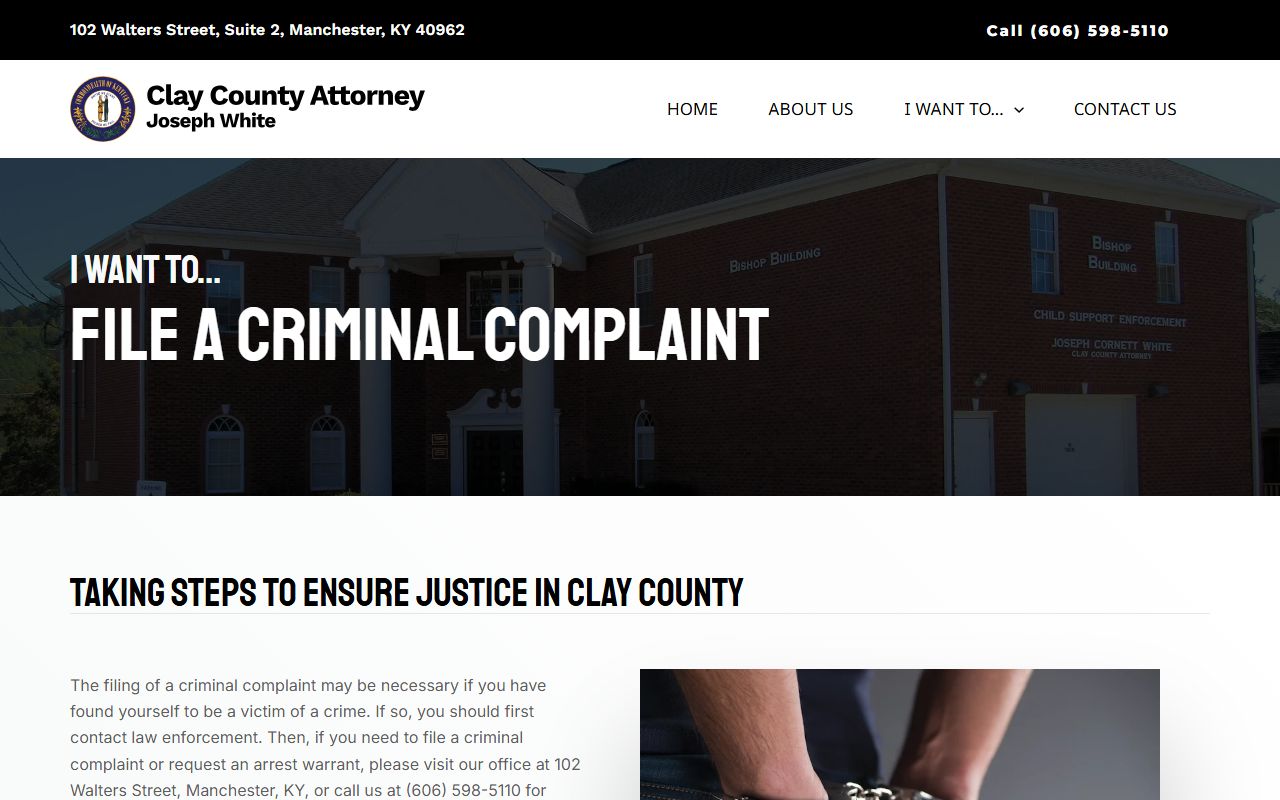
That process requires sworn facts, so the court charge record should be traced back to the official complaint, citation, or indictment rather than a rumor or third-party listing.
| Document | Filed By | Common Use | Clay County Record Effect |
|---|---|---|---|
| Complaint | Victim, officer, or prosecutor through sworn facts | Misdemeanor, violation, warrant-request, or initial accusation context | Can begin or support a District Court criminal charge. |
| Information | Prosecutor | Formal prosecutor-filed charge where permitted | May appear in the court file as the operative charge document. |
| Indictment | Grand jury | Felony prosecution | Moves the felony accusation into Circuit Court prosecution. |
Clay County Charge Status
A charge status is not static. A Clay County charge can be pending at arraignment, amended after negotiation or review, reduced to a lower degree, dismissed, transferred, diverted, or resolved by guilty plea, trial verdict, or acquittal. A public summary may show the current status without all legal reasons behind the change. The docket and disposition entries should be read together.
| Status | What It Means | What to Check Next |
|---|---|---|
| Pending | The charge remains active and unresolved. | Next hearing, bond, counsel, and court division. |
| Amended or reduced | The original charge changed to a different offense, degree, or level. | Amended charge, plea terms, and final disposition. |
| Dismissed | The court or prosecutor ended that charge in the case. | Whether dismissal was with prejudice, without prejudice, or eligible for expungement. |
| Transferred | The matter moved to another court or case track. | New case number, Circuit Court indictment, or related docket. |
| Convicted | A guilty plea or verdict produced a conviction. | Sentence, probation, fines, restitution, and post-judgment terms. |
Clay County Charges vs Convictions
Being charged in Clay County is not the same as being convicted. The charge tells what the Commonwealth, County Attorney, officer, or grand jury accused the person of doing. The conviction tells that the accusation ended in a legally recognized guilty outcome. A charge can be serious and still end in dismissal, acquittal, amendment, diversion, or expungement.
| Topic | Charge | Conviction |
|---|---|---|
| Legal meaning | An accusation filed in court. | A final guilty result by plea or verdict. |
| Timing | Appears near the beginning of the case. | Appears at disposition or sentencing. |
| Record reading | Check statute, description, count, degree, and status. | Check disposition, sentence, probation, costs, and post-judgment orders. |
| Public use | Must be read as an accusation unless resolved. | May affect background checks, sentence, driver history, or supervision records. |
Complaints, Warrants, and First Appearances
Clay County arrest records and charge records often intersect with warrant questions. The County Attorney criminal complaint process can involve an arrest-warrant request based on a sworn statement of facts. Bench warrants can appear later if a defendant misses court, violates a court order, fails to pay as ordered, or does not comply with conditions. Search warrants are different because they authorize a search, not a charge by themselves.
Recent statewide changes also matter. KCOJ announced that eSearch Warrant became available in all Kentucky counties by the end of October 2025. That system lets police request and judges authorize or deny search warrants electronically. It is not a public warrant lookup and does not create a public Clay County arrest-records database.
Note: For active warrant safety questions, use official sheriff, clerk, attorney, or counsel channels instead of unofficial databases.
Clay County Criminal History Limits
A Clay County charge record is not the same as a statewide criminal-history report. KCOJ criminal case records show court case activity. Kentucky Online Offender Lookup shows state prison or supervision records, not a county court charge index. VINELink is a custody-notification tool. The Kentucky State Police Sex Offender Registry is a registry search, not a general arrest or charge search. Each source answers a different question.
The Clay County Attorney Casey's Law page is an example of a local court-adjacent service that can involve petitions and court action but should not be misread as a criminal charge lookup.
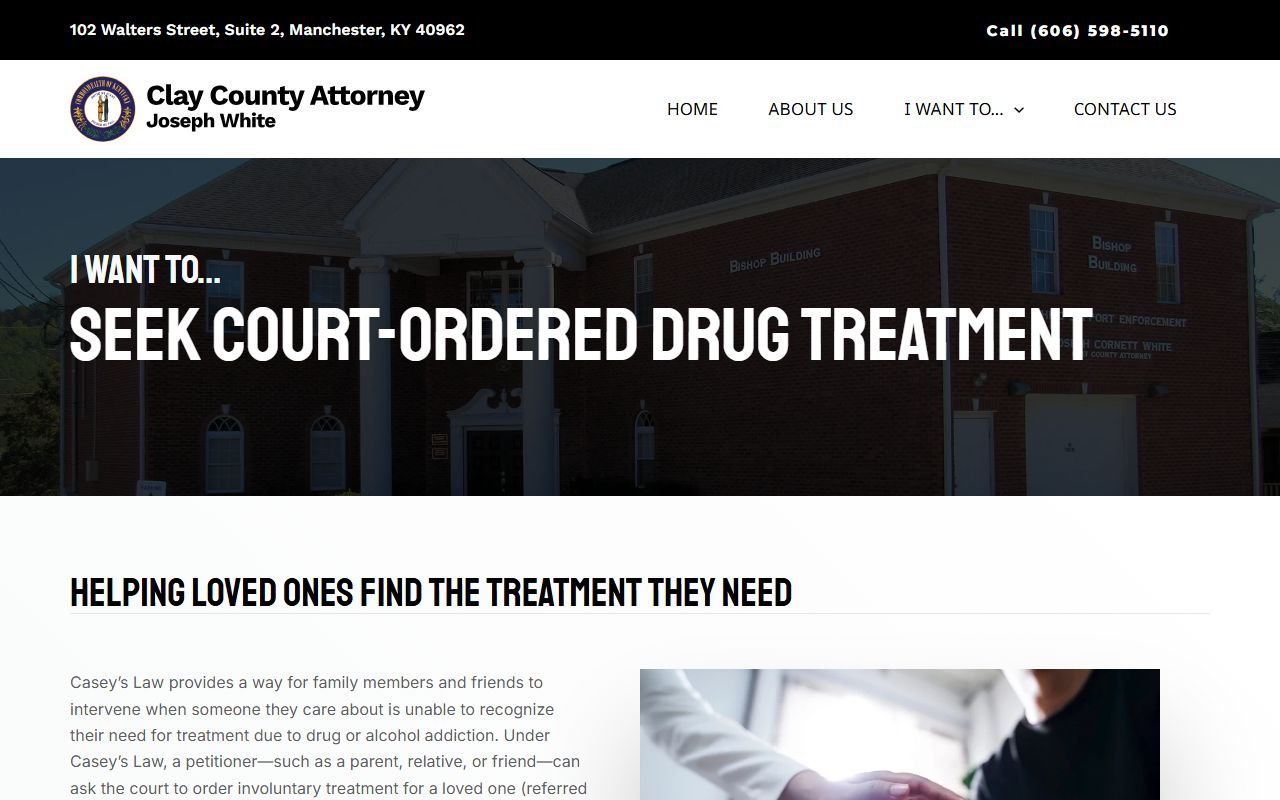
Clay County has several court-related County Attorney services, so the record type should be identified before treating a filing as a criminal charge.
Sealed and Expunged Clay Charge Records
Kentucky expungement and confidentiality rules can limit public access to arrest records and court charge records. KRS 431.073 and KRS 431.079 govern parts of the expungement process for eligible criminal records. KCOJ expungement materials captured in the research describe certification requirements and separate application paths for felonies, misdemeanors, violations, traffic convictions, acquittals, dismissals, and failure-to-indict matters.
| Topic | Sealed | Expunged |
|---|---|---|
| Public visibility | Restricted from public view by law or order. | Removed or deleted from official court and agency records as allowed by statute. |
| Record existence | May still exist for court or authorized use. | May be omitted from official state background checks after completion. |
| Common reason | Juvenile, mental-health, adoption, safety, or court order. | Eligible dismissal, acquittal, failure to indict, misdemeanor, traffic, or qualifying felony path. |
| Access path | Party, attorney, agency authority, or court order may be needed. | Use KCOJ expungement forms and the court where the case occurred. |
Restricted Clay County Arrest Records
Several charge and arrest-related records are not open to general public search. Juvenile court records are confidential under KRS 610.340 unless a specific law permits disclosure. Mental inquest warrant and mental-health petition materials are sensitive and may be confidential. Active investigations, sealed warrants, protected victims, minors, protected addresses, and redacted identifiers can limit what appears in a public case or arrest summary.
When a Clay County arrest record or charge does not appear online, do not assume the matter never existed. The record may be too new, too old, sealed, expunged, juvenile, held by a different agency, or listed under a related case number. The most reliable path is to identify the record type first, then contact the sheriff, jail, prosecutor, or circuit clerk that actually holds that part of the record.